Toby Abse raises two cheers for the fall of Hungary’s autocrat
VICTOR Orbàn’s defeat in the Hungarian general election in mid-April was an event of international, not just purely Hungarian, significance. Orbàn had started his political career as an anti-Communist Liberal, favouring conventional neo-liberal economic policies, and his first stint as prime minister in 1998-2000 reflected this outlook. However, when he returned to office in 2010, he became a right-wing populist, and developed a particular hatred for the Hungarian billionaire George Soros, who had originally assisted him in the late 1980s.
Orbàn had in his 16 continuous years as Hungarian prime minister (2010-26) been the pioneer of ‘illiberal democracy’, as he himself called it – the use of the formal appearance of parliamentary democracy to gradually move towards a de facto dictatorship that destroyed the independence of the judiciary, massively reduced press freedom, systematically persecuted NGOs, and brought universities under very tight state control (or in the case of Soros’s Central European University, drove them out of the country). His policies have been copied by the Law and Justice Party (PiS) in Poland, and to some extent by his counterparts in Slovakia and the Czech Republic – at the height of his influence, he had brought all four countries into a so-called ‘Visegrad’ bloc, that could undermine the European Union from within. However, the defeat of PiS by Donald Tusk in the Polish general election two years ago had to some extent weakened his position – it was no longer possible for Hungary and Poland to take turns in defending each other’s violation of EU laws and principles, something which continued even after the two countries fell out over the Russo-Ukranian war in 2022.
Orbàn’s influence had not been confined to Eastern and Central Europe. The January 2026 campaign video made by his international supporters demonstrated his leadership of the far right across the European continent and beyond. Although not all the European far right parties joined his ‘Patriots for Europe’ bloc in the EU Parliament, the other groupings rallied to his cause. Giorgia Meloni, Marine Le Pen, Santiago Abascal of the Spanish VOX Party, Alice Veidel of AfD, the Israeli Benjamin Netanyahu and the Argentinian President Milei, all lined up to back him in the forthcoming Hungarian general election. Equally significant, perhaps more so, was the visit of the American vice-president J.D. Vance a few days before the election to give his, and Donald Trump’s, endorsement to the Hungarian autocrat.
In the event, Orbàn was so clearly defeated that he could not resort to any trickery to overturn the result, as many suspected he would have done in a closer contest. Pèter Magyar’s Tisza Party got 52.44% (136 seats) as against the 39.14% (56 seats) of Orbàn’s Fidesz and its Christian Democratic junior partner, the KDNP. The only other party that got over 5%, and thus got over the threshold for parliamentary representation, was Mi Hazànk – a split from the more internationally notorious Jobbik – with six seats. The new Hungarian parliament is entirely made up of right-wing nationalists, ranging from the arguably ‘centre right’ Tisza to the outright neo-fascist Mi Hazànk – there are no MPs who could be described as Liberals, Greens or Social Democrats, let alone Socialists. The price that left and centre voters paid for voting Tisza, to get rid of Orbàn, is quite a heavy one. Without boring readers with the precise mixture of PR and FPTP used in the contest, it is worth pointing out that the system Orbàn had devised to gain a two-thirds majority of the seats, in order to change the constitution, had backfired on him, and his opponent Magyar got more than 50% of the votes.
Political divorce
While Orbàn’s defeat is a serious blow to both Trump and Meloni, it is impossible for any AGS member to share Ursula von der Leyen’s euphoria about Magyar and Tisza. Before his February 2024 break with Orbàn, Magyar had been a loyal Fidesz member for 20 years, and had ended up as part of Orbàn’s inner circle. His ostensible reason for belatedly leaving Fidesz was a scandal that broke when it was revealed that leading Fidesz figures had helped to cover up widespread paedophilia. In February 2024, massive popular unrest over the scandal forced the resignation of Katalin Novàk, the President of the Republic, who was revealed to have given a pardon to somebody convicted of paedophilia. The scandal also led to the resignation of the Justice Minister, Judit Varga, who had been Magyar’s wife for some years. Varga had just obtained a divorce from Magyar. To say that it was an exceptionally acrimonious divorce is an understatement. Magyar published a secretly recorded tape of his ex-wife talking about the cover-up, while Varga made allegations of verbal and physical violence against her ex-husband.
If the votes for Tisza among both young people and the citizens of Budapest owed much to a desire to return to democracy and the rule of law, the votes in the countryside and the small towns that tipped the balance in Magyar’s favour were more of a reaction to the rising inflation, increased cost of living, higher rents and so forth, as the prosperity of the early Orbàn years disappeared. Although Magyar will be somewhat more amenable to the European Union, and less inclined to blatant disregard of democratic norms, it is doubtful if his politics are all that different from Orbàn’s. In particular, he has absolutely no intention of modifying the rabidly racist anti-migrant policies of his predecessor. He had committed himself to reinforcing Orbàn’s border wall with Serbia, and intends to increase the number of border guards. He pointed out to journalists at a press conference held just after his victory that ‘there are European countries that have succeeded in resolving the problem of conforming to European Community law, and at the same time impeding the entry of illegal migrants. Slovakia and Poland are examples. It is possible if you want to.’ While he has realised that Orbàn’s banning of the Budapest Gay Pride march was counter-productive, and brought hundreds of thousands onto the streets in support of the LGBT community, he has given no indication that he intends to repeal the homophobic laws – equating any representation of homosexuality in TV programmes, films, plays, magazines and books, with the promotion of paedophilia – which Orbàn inserted into the Hungarian constitution. Magyar’s comment that ‘everyone can assemble freely and love whoever they want’ just indicates that he will not be as intolerant as Orbàn.
Election slogans
Although Magyar frequently used the 1956 slogan – ‘Ruskik haza!’ (Russians go home!) during his election campaign, he has a pragmatic attitude to Russo-Hungarian economic relations, especially with regard to gas and oil. He has recently explained that ‘we will do everything possible to diversify, but this does not mean that we will separate ourselves from Russia. We will always procure oil in the most economic and secure way.’ Obviously, there is no mention of renewables, and Hungary’s only other source of energy is nuclear power. Orbàn planned to rely on the Russians for investment and technology to replace Hungary’s antiquated nuclear power stations. Magyar agreed with Orbàn’s decisions to block the EU’s proposed €9-billion loan to Ukraine, and he opposes any early entry of Ukraine into the EU being facilitated by any easing of the usual conditions for new entries. While the opposition to the loan may well be a bargaining counter to get the EU to unfreeze the funds they withheld from Orbàn in recent times, it would be a mistake to assume that he is the enthusiast for the Ukrainian cause that Fidesz presented him as in the election.
Toby Abse is a member of the Socialist Alliance and AGS national committees
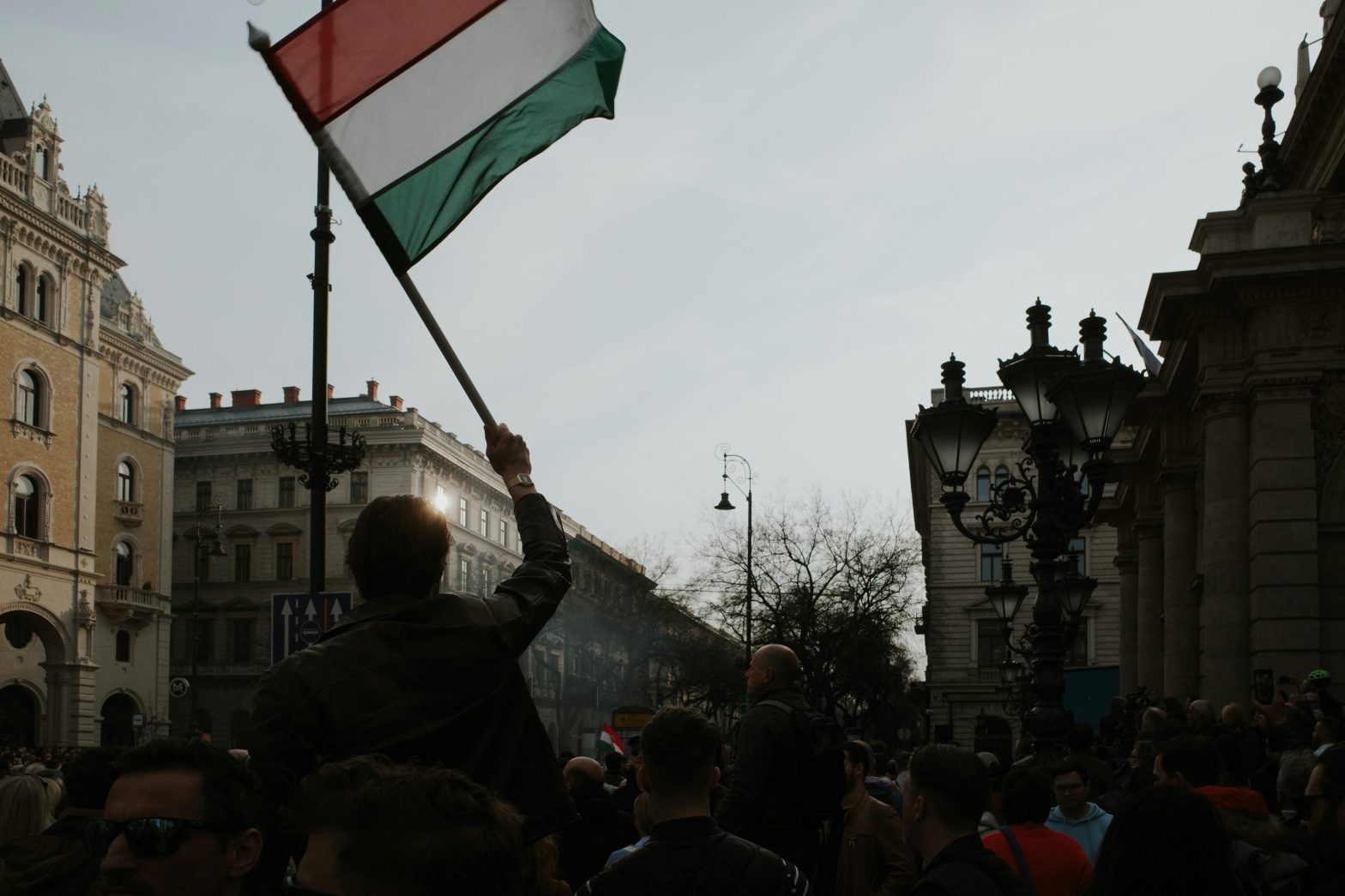
Photo by Richard Stachmann/Unsplash

